
- Swing
- Slide
- Boom


Choosing the right access system for your gate is one of the first big decisions facility managers and property owners need to make when securing a site. Both automatic boom barriers and manual gates get the job done, but they go about it in very different ways, and the right pick depends on your traffic volume, budget, and how hands-off you want the day-to-day running to be.
At Gate Opening Systems, we design, manufacture and install boom barriers and gate automation for properties across Melbourne, from busy commercial car parks to quiet residential driveways. So we know there’s no single right answer, just the right answer for your site.
This guide breaks down how each system works, where each one shines, and which is likely to suit your property best.
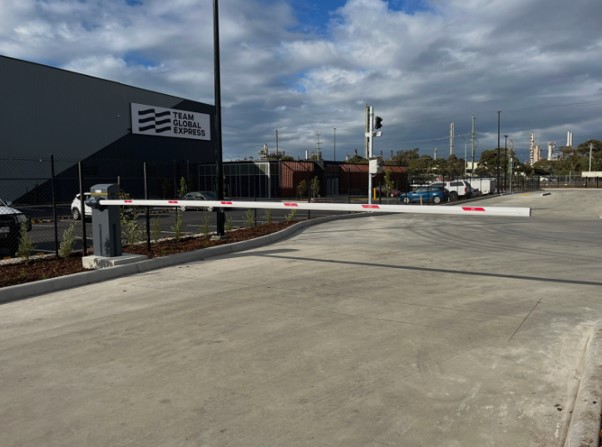
Automatic boom barriers use electric motors and smart sensors to lift and lower a horizontal arm. Manual gates rely on human effort, hand cranks, or counterweights. Automatic versions suit busy areas, while manual gates fit low-traffic or remote spots.
Automatic barriers cost more to set up initially, but you save on wages as they don’t need to be staffed to work. They can open quickly through identifying cameras, such as those at shopping centres that scan your numberplate; or through swipe cards. This helps to keep traffic moving quickly.
Manual gates need verification from a human operator before the gate will open. This slows down traffic but can give you more security.
Then there is the power source. Obviously, automatic gates need to be powered, either through the mains or in remote locations, by solar power. If this power fails, the gate won’t open. Manual gates can be opened by one operator thanks to the counterweight system.
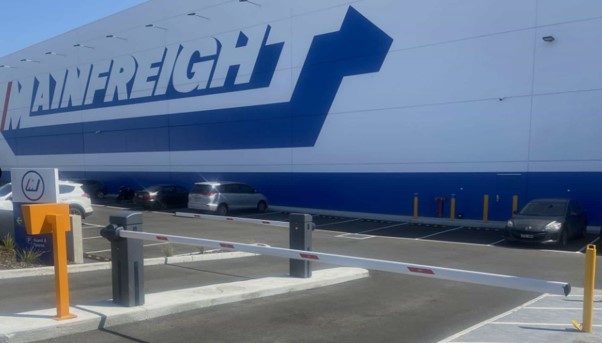
Automatic barriers use a power source to work an electric motor that lifts the gate up or down. Safety sensors indicate when a vehicle is waiting to pass through. These sensors can either alert someone remotely, or check the vehicle and open the gate without human intervention.
Alternatively, the automatic boom gate can open once a tag has been scanned, or a driver has taken a ticket from the machine.
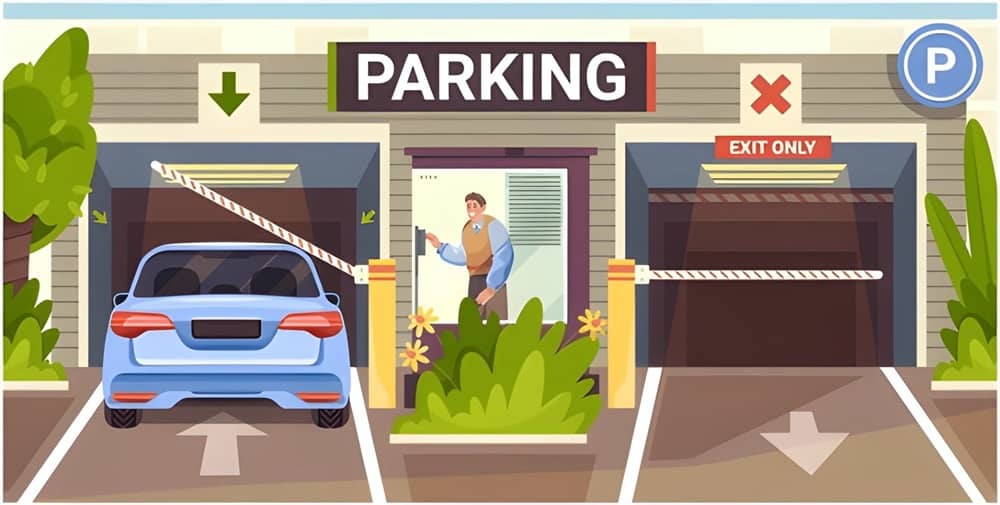
Manual gates are totally reliant on human intervention. A simple, mechanical balance is used to open and close the gate, working on a pivot system. There could also be a physical latch or lock to keep them shut.
Automatic boom barriers use electric or hydraulic motors to manage vehicle traffic quickly and safely. Automatic systems offer fast opening speeds, smart access control integration, and smooth handling of high-volumes of traffic.
They’re good for traffic control. Someone can tap an RFID tag, or take a ticket and the gate will open quickly, allowing fast entrance. This is good for high traffic areas such as carparks or office entryways. Drivers don’t need to exit their cars and they don’t need to wait for a human to check them in and open the gate.
Security with an automatic gate is good as well. You can have electronic entry with RFID tags, licence plate cameras or facial recognition software. And people can be added, or removed, remotely, rather than have a human make that decision at the gate. Anyone who does gain entry, can be logged. If there is a stolen ID for example, you can know where and when it was used. It is hard to force an entry when the motor that opens the gate is locked. Manual gates, by contrast, can simply be lifted by hand if someone forces their way in.
When your budget won’t allow it, or if you have a low-traffic location, or even a temporary location, a manual gate can make sense as a better choice.
Temporary sites, like that of a construction site, is a great location for a manual gate. They’re easier and cheaper to set up than an automatic gate, and when the construction work, for example, is done, you can pack it down and remove it easily.
This also helps with budget. If you don’t have the budget for an automatic gate, a manual gate won’t have you paying for an electric motor, sensors and monitoring.
If the location where you need a boom gate is remote, with no access to mains power, or if it is a very low-traffic channel, then a manual gate makes more sense. You don’t have the issue of holding up traffic if there is barely any traffic.
| Feature | Automatic Boom Barrier | Manual Opening Gate |
| Speed | Quick, can open in seconds. | Slower, requires a person to open. |
| Power | Needs mains or solar electricity. | No power needed besides human power. |
| Costs | High purchase and installation cost. | Low cost to install. |
| Maintenance | Regular mechanical and electrical servicing. | Very low. |
| Best Use | Busy car parks, toll roads, office parks | Rural properties, low-use and temporary sites. |
Automatic boom gates offer speedy, secure entry with remote-controlled access if needed. They’re perfect for high-traffic or high-security properties around Melbourne. For lower volumes of traffic, with that human layer of security, a manual gate would work, especially if the budget is a priority when making the choice.
The four key indicators to help you make your decision are:
There’s no one-size-fits-all answer here. The right choice comes down to your property’s traffic, budget, and power access, and sometimes a bit of trial and error to get the balance right.
If you’re still weighing up the best fit for your site, our team at Gate Opening Systems is ready to help. We’ve been designing and installing boom barriers, industrial gates and access control systems for properties across Melbourne, from Campbellfield to Dandenong and Tullamarine, since 1985, so we know how to match the right system to your traffic flow, security needs and budget.
Give us a call on 03 9305 3034 or reach out through our online form, and let’s find the setup that works best for your property.


 Quote Enquiry


